Saturday, 11 February 2012

How to Butcher a Pig...

Traditionally we have always receieved our pigs ready butchered courtesy of Helletts and Son from Kimbolton. This weekend however, we decided to have a go ourselves. At the end of the day how hard can it be? Well here is a guide of how to butcher a pig:

You will need:
A bone saw, a set of butchers boning knifes and a good quality butchers steak knife. Also of some use would be a meat cleaver and a steady hand!!!


1. Start by removing the head. Use a good quality butchers knife to slice about three fingers from the back of the ear down towards the spine until you meet bone. Roll the half over and repeat until your cut meets the bone. Use a bone saw to cut through the bone.


2. You now need to seperate the hind leg or hams. The pelvic bone should be partially visible from where the pig has been split. Use this as a guide to separate the leg at right angles to the line of the spine (A row of bones running along the back of the pig often knwon as the chine bones).
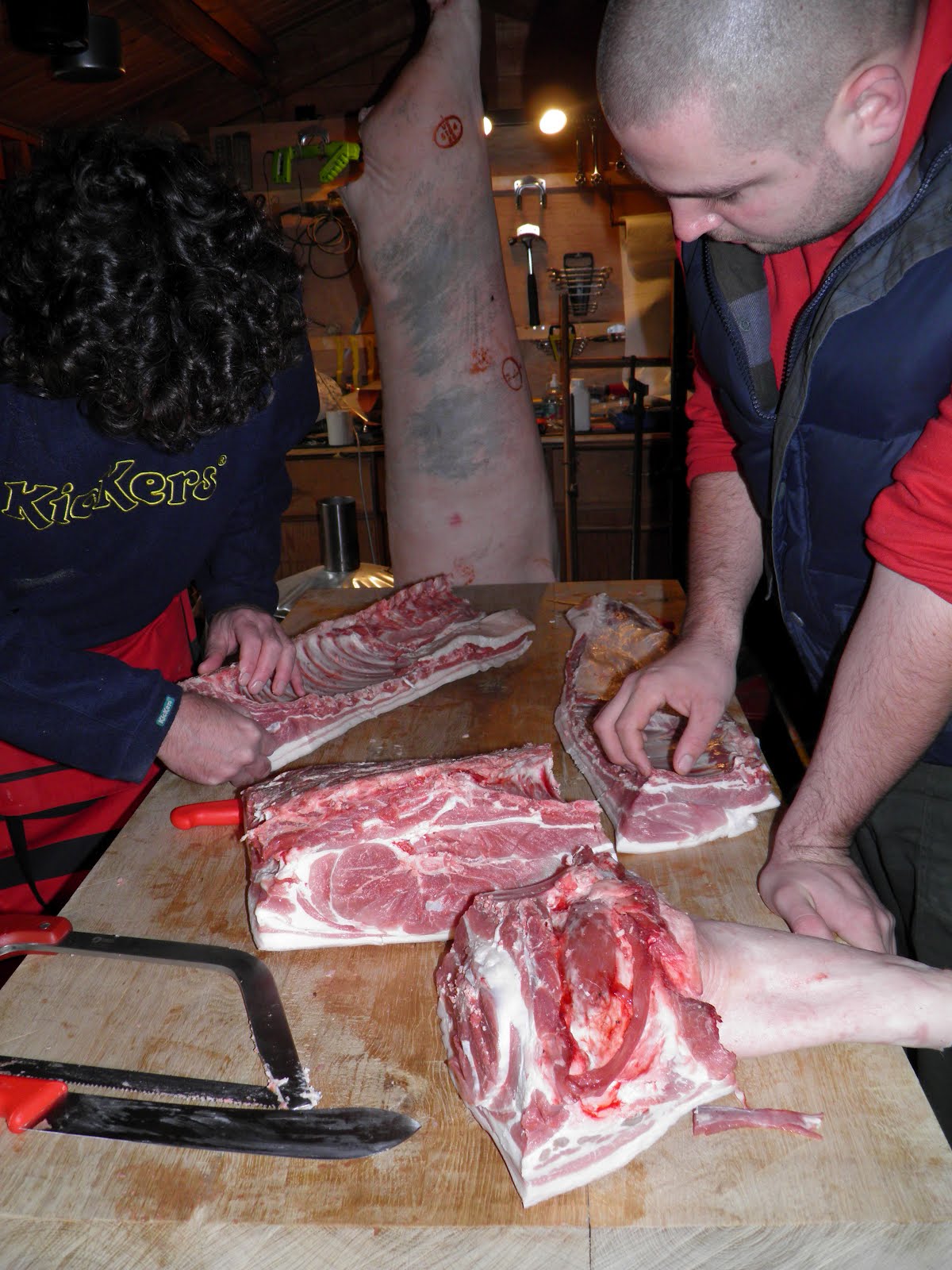

3. Next remove the belly from the loin. At the rear of this section (The section formally attached to the ham) Their is a clear demarcation between the scrag end of meet and the lighter leaner eye of the chump end. Using this as start point use a knife to run along the full length of the pig from this point half way up the ribs and all the way along under the chine bones. Use a sharp boning knife to start your cut following the line until you meet the rib. Switch to the saw and using your hand to support the pig underneath saw through the ribs. Finish this cut with the knife and you should be left with two clear sections as in the picture. In the fore ground you can see the two sections of the shoulder and front leg (Picnic ham). The two sections being handled are the loin with spare rib on left (tenderloin already removed) and belly with short rib on the right.

4.  Next you need to remove the tenderloin, it sits in the top section of the middle of the pig (The loin section) at the chump end. Using the chine bones as a guide follow their natural line to gently slice this cut from the rib and chine.

5. Now you can seperate the front leg and shoulder. A good rule of thumb is to use the ribs as a guide when seperating this section. Count four ribs along from the front of the and push a boning knife all the way through to mark the line of cut. Use a steak knife to start your long cut at right angles to the chine. When the knife hits the chine switch to the bone saw to seperate out the joint. This joint can now be cut in half at the elbow joint leaving you with the shoulder joint and the picnic ham .

6. You are now left with some decisions to make. It is best to seperate the belly section into two halves by slicing neatly just before the ribs.

7. The loin section is best split into three, The chump (The section of the loin containing only chine bones but no ribs) is split from the loin and makes a lovely stuffed and rolled joint. This just leaves the loin joint with spare ribs attached. These are easily removed by using the ribs to gently guide the cut of the knife.
Splitting the Ribs from the loin
The spare rib and remaining loin joint, each best split into two halves


You are now left with several very large joints and several much smaller ones. The larger joints can be literally cut in half with liberal use of knife and saw. All told half a pig will yield a thoroughly good amount of tasty meat.
Joints boned and rolled ready for roasting

Vacuum packed ready for the freezer all told 8 family roasting joints and many other interesting cuts from just 1/2 a pig
All the major joints before cutting into smaller more mangeable pieces

One half down, one half left...

Friday, 20 January 2012

Prize Winning Green Fingers

We've talked a lot about our pigs and meat products but just as important is the horticulture work that goes on at Redborne. The farm produces a range of seasonal vegies and Jan is able to transform every scrap of land and even recycle a few interesting items into planters that are full of blooming flowers and plants.


Over the last year the grounds have bloomed in an array of beautiful colours and shapes and smells (all pleasent we promise). The latest plans for the coming year are: A Strawberry Cream Tea and a whole series of fruit and vegetable pick your owns. If you want more information on seasonable fruit and veg then feel free to get in touch.

Thursday, 19 January 2012

Recipes

We thought it would be nice to have some inspiring Recipe suggestions using Products from Redborne:


This week we thought we'd treat you to two recipes the first thanks to www.lovepork.co.uk

Gammon and Sausage Paella

From: 'Love Summer, Love Pork'
  • Serves 4
  • Cooking Time 30 mins

Recipe ingredients

225g (8oz) Smoked gammon steak, fat removed and
cut into cubes
2 Spicy pork sausages, thickly sliced
15mlsp (1tbsp) Olive oil
1 Onion, peeled and roughly chopped
2 Cloves garlic, squashed
5mlsp (1tsp) Smoked paprika
300g (10oz) Short grain paella rice
Pinch saffron, infused in a little water
1.1 litre (2pts) Pork stock
Seasoning
1 Orange pepper, deseeded and chopped
225g (8oz) Green beans, tails removed

Preparation

In a large shallow pan heat oil and add onion and garlic. Cook until starting to soften. Add the gammon and sausage, continue to cook until browned.

Add the paprika and the rice, cook for 1-2 minutes.

Add the saffron plus water and about half of the stock. Stir well, add pepper and beans. Bring to the boil and allow to simmer for about 20 minutes. Add more stock during the cooking as it becomes absorbed, stir and then leave to absorb all the flavours.

Serve straight away as soon as rice is tender and liquid absorbed.


The next recipe one of our own:

Huevos Rancheros

Serves 4
Cooking time 20mins

Recipe ingredients

500g Bacon
2 Avocadoes
500g Cherry tomatoes
1 Onion
4 eggs
4 Tortillas
Tomato Puree
1 Tin of Black Eyed Beans
200g Grated cheese
1 Lime

Preparation

Make the salsa by chopping the tomatoes, peeling and dicing the onion and avocadoes and adding to a bowl with the juice of one lime. Mix well and set aside.

Fry the bacon in a dry non stick pan (Good bacon shouldn't need any fat). Whilst the bacon is cooking spread the tortillas with tomato puree like a pizza base, sprinkle with black eye beans and cheese and place under the grill until the cheese bubbles.


Add the bacon to the tortilla and fry the eggs in the bacon fat, Top the tortillas with salsa and the fried eggs and serve.


Redborne Farm sells bacon, fresh eggs and a range of sausages.


If you value local food why not search on these websites for more suppliers:


http://www.artisanfoodtrail.co.uk/

http://www.bigbarn.co.uk/

http://www.farmshop.uk.com/


Enter your postcode to find local food:


Wednesday, 18 January 2012

The Importance of Welfare

On occasions a student will ask, 'Why do you look after the animals when you're only going to eat them anyway?'


The answer isn't a simple one and stems from where we choose to draw the line. We could produce a larger quantity of cheap products and ensure that all of our animals are kept in very sterile conditions. We feel that this doesn't produce a happy animal, happy animals produce larger litters of piglets, are healthier and if we're honest taste a lot better.

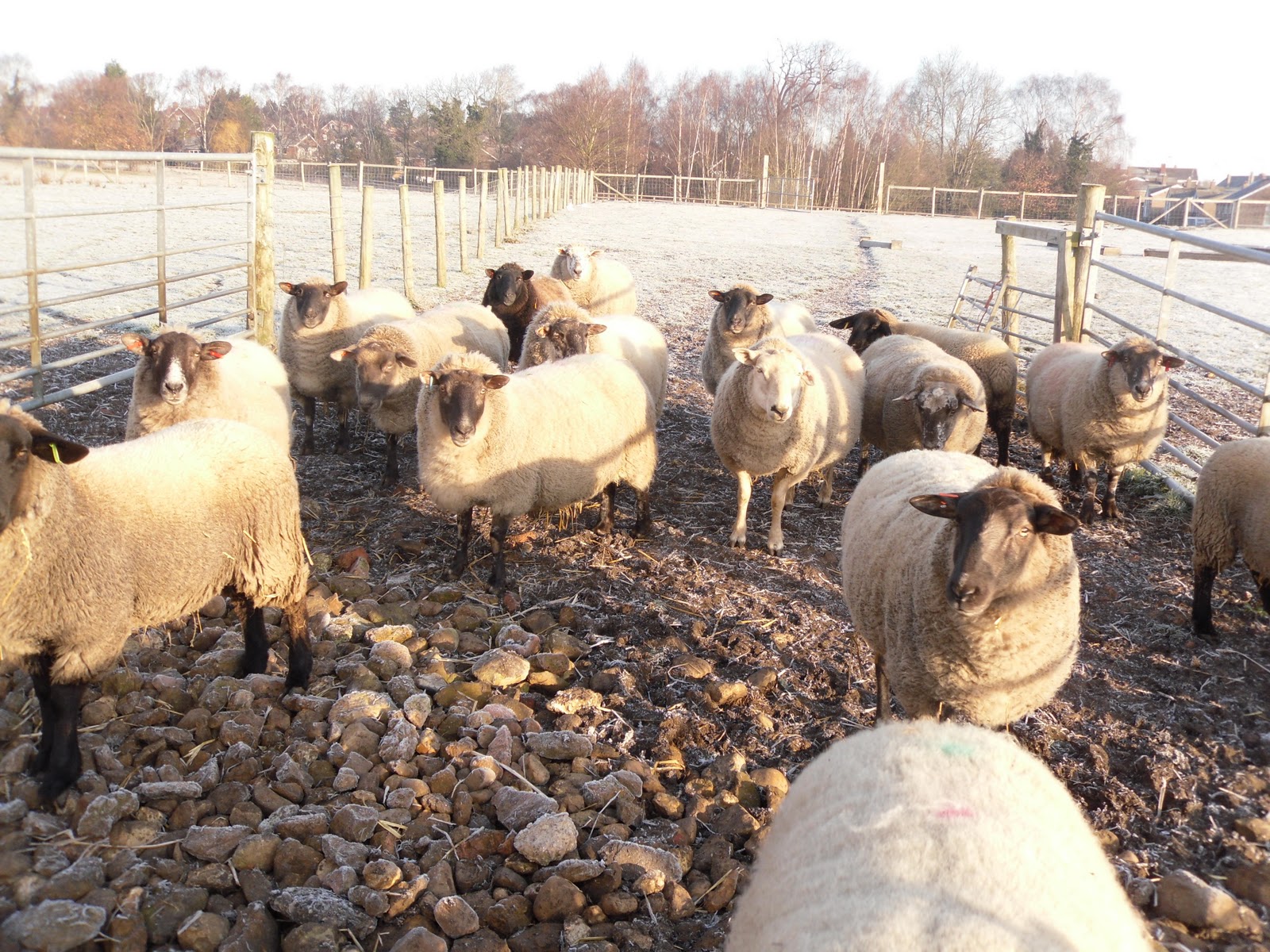
We have tried wherever possible to give all our animals the best conditions, from our free range chickens and turkeys to our sheep with their extensive grazing. Even our pigs are spending more time outside furrowing and digging in the soil displaying their natural behaviour. The breeds we keep strive to give the animals the best possible life, they are slow to grow and mature giving them plenty of time to develop and grow. This puts less stress on the animals producing rich, deep flavours and a product that staff and students can be proud of.

For more information on better welfare products see:

http://www.lovepork.co.uk/pork-promise?gclid=CK2OqeXZ2a0CFcsKtAoddmw8lg

From egg to plate: The Turkey Story

At Redborne School farm your Christmas Turkey undergoes quite a Journey. They arrive in July as day old chicks. And are counted into their brood pen. The brood pen has deep warm bedding and lots of warm lamps to keep them toasty. At first they are fed on chick crumbs specially designed for easy digestion.

The Turkeys are injected to prevent a range of common illnesses to give them a happy active life free to enjoy the large outdoor pen they roam in the day time.


The Turkey's are secured at night in a warm barn heated during the worst weather. Students feed and care for the animals throughout the summer and all the way through until December. Our turkeys, being free range and slow growing traditional breeds take at least 6 months to grow to maturity. This differs from mass produced birds taking just 3 months. The length of time a bird takes will affect the overall taste, the longer they live the more depth of flavour.   

The Turkeys are plucked by the Farm students. Plucking by hand is a very laborious process and takes a considerable amount of skill. Students start with limited or no experience and tend to leave us with a new skill few people in the UKcurrently posess.


The Turkey is finally finished and prepped for the oven by Redborne Staff ensuring a high quality product for Christmas Day. In order to produce these turkeys it takes hundreds of hours of labour over months at a time to ensure that one meal is picture perfect.

Tuesday, 20 December 2011

The experience arrives at Redborne


Mike Churchouse of the 'Sheer Sheep Experience' was kind enough to bring his roadshow to the school. As part of the show there were sheep from all parts of the British Isles from Hill sheep to primitve breeds. Mike showed the students the value and merits of each breed and why they are such a vital component of todays agriculture industry and that of tomorrow.


The students and staff thoroughly enjoyed the whole experience and the value it has added to the students City and Guilds Agriculture course and our ELBS students.

Some of the breeds Mike brought along:


The Shropshire

The Boarder leicester

The Lonk


The Teaswater


For more information on Mike and What he does click on our links

Monday, 7 November 2011

British Sausage Week

This week we celebrated National Sausage week as shown here by Noddy Holder. Redborne School Sausages were served in a delicious 'Toad in The Hole' in the school canteen and a BBQ was held on the Farm selling tasty hot dogs at lunch.
The Sausages were a big hit, enjoyed by staff and students. Sausages are always for sale down on the farm priced at £3/lb. This year we will also be experimenting with our own bacon so those of you who have ordered christmas Turkeys may want some Redborne Bacon to grace the top of your Redborne Turkey